
Commercial glass restoration · Greater Montreal
Preserve the glass. Reduce the scope of replacement.
Vitrofix provides on-site restoration and polishing for storefronts, façades, curtain walls, glass partitions, glass retail displays and commercial refrigeration glass doors when the surface damage and glass type are compatible.
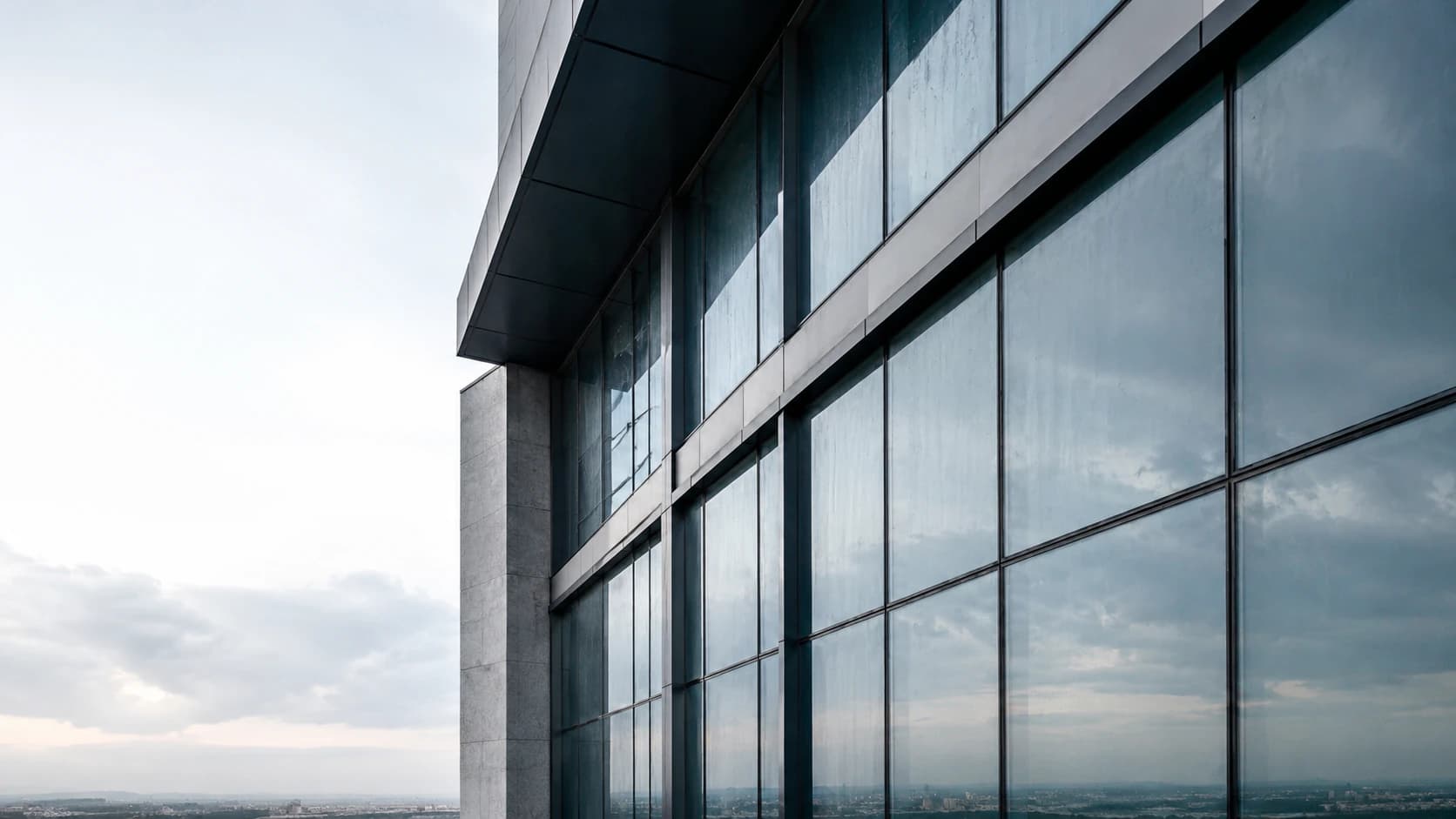
Commercial architecture
Façades, storefronts and curtain walls.
Damage
Exposed surfaces where every mark becomes visible
Scratches, graffiti, mineral deposits and surface damage can affect a building’s appearance without necessarily requiring removal of the glass.
- Superficial and certain deeper scratches
- Graffiti and surface vandalism
- Mineral deposits, hard-water stains and scale
- Haze, erosion, compatible rust staining and contamination
When compatible damage can be corrected through controlled abrasion and polishing, preserving the existing glazing may avoid the complexity of removing and replacing architectural glass.
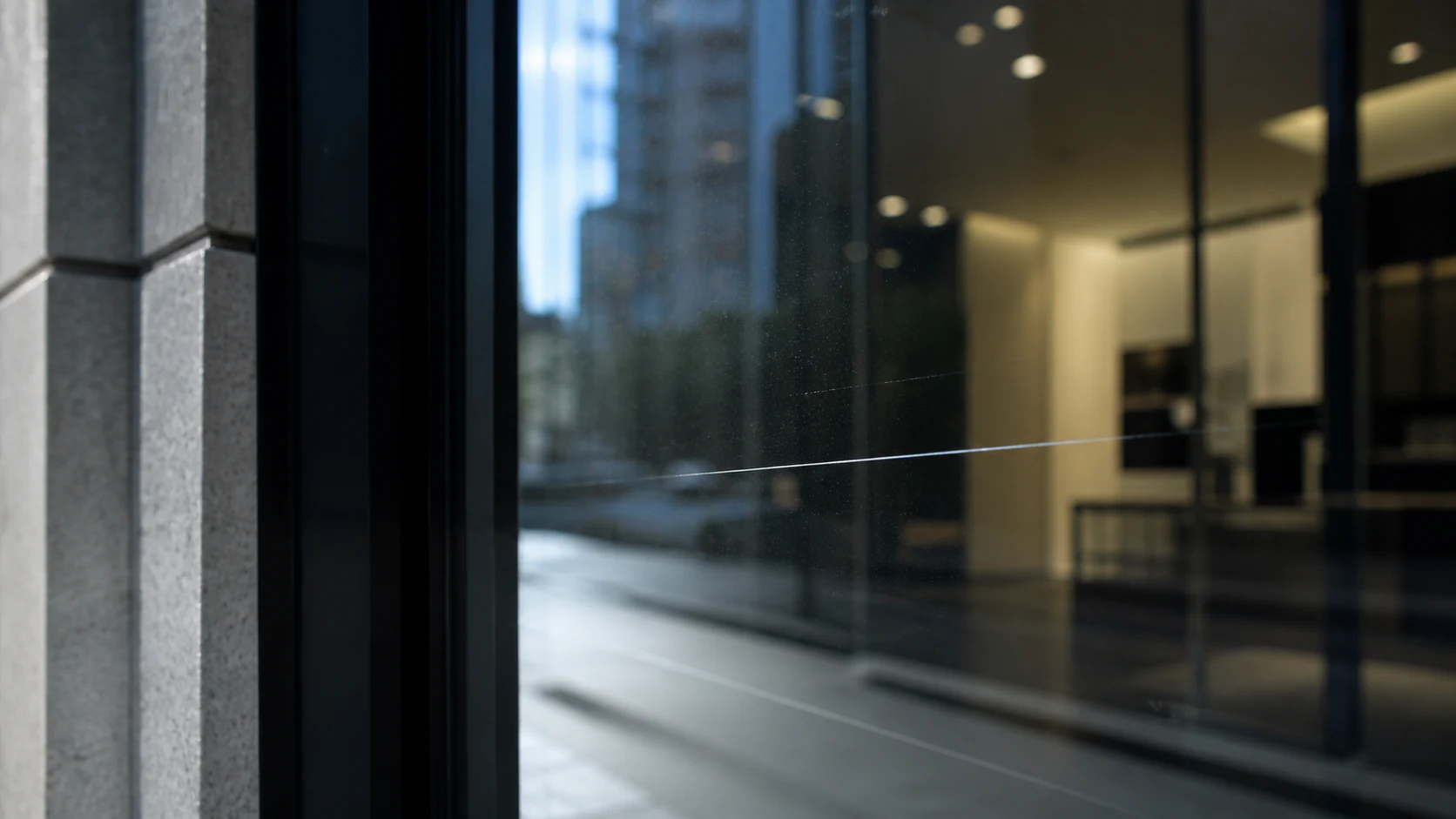
Scratches
Inspect apparent depth and affected area.
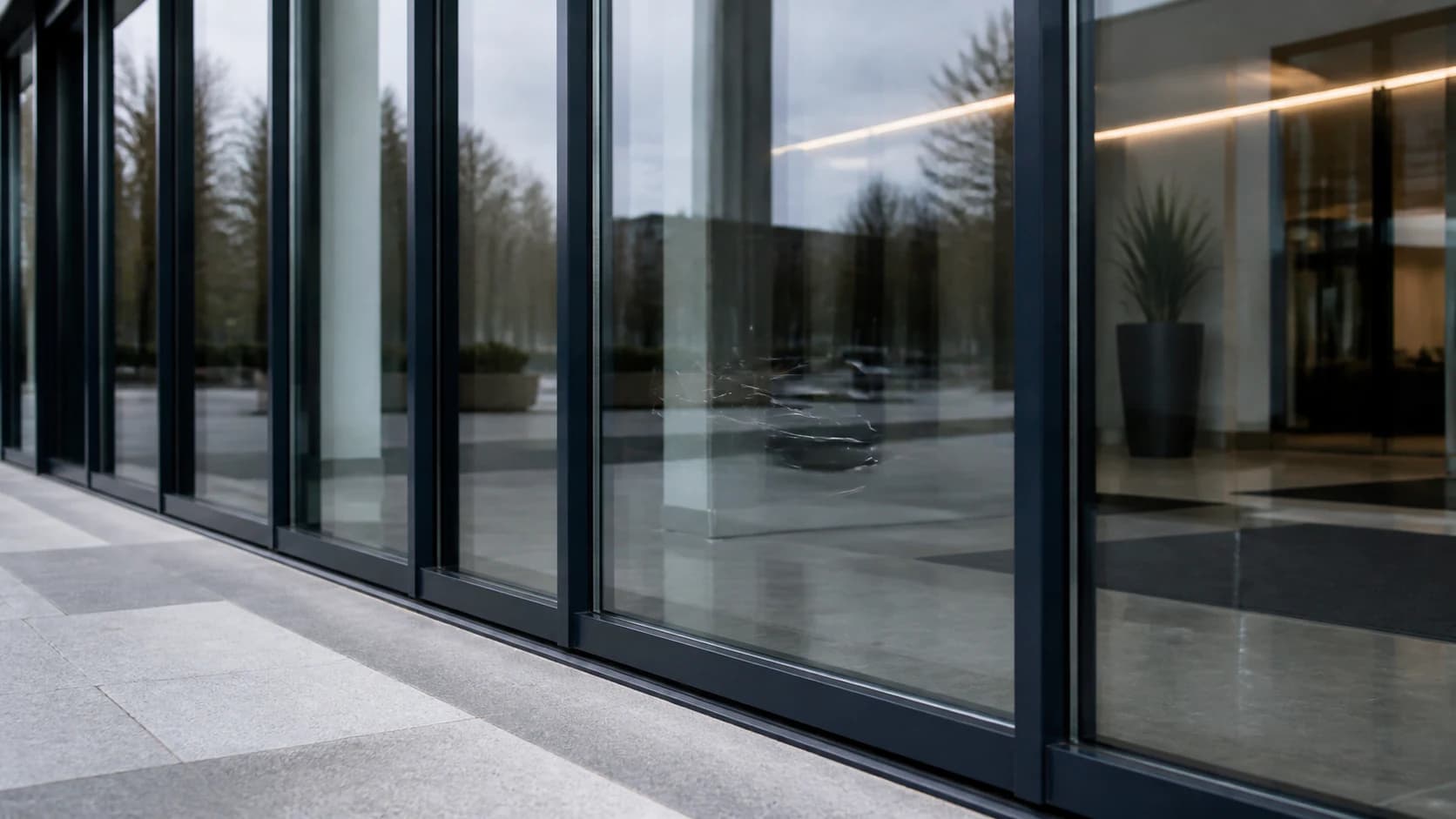
Vandalism
Place the alteration in context.
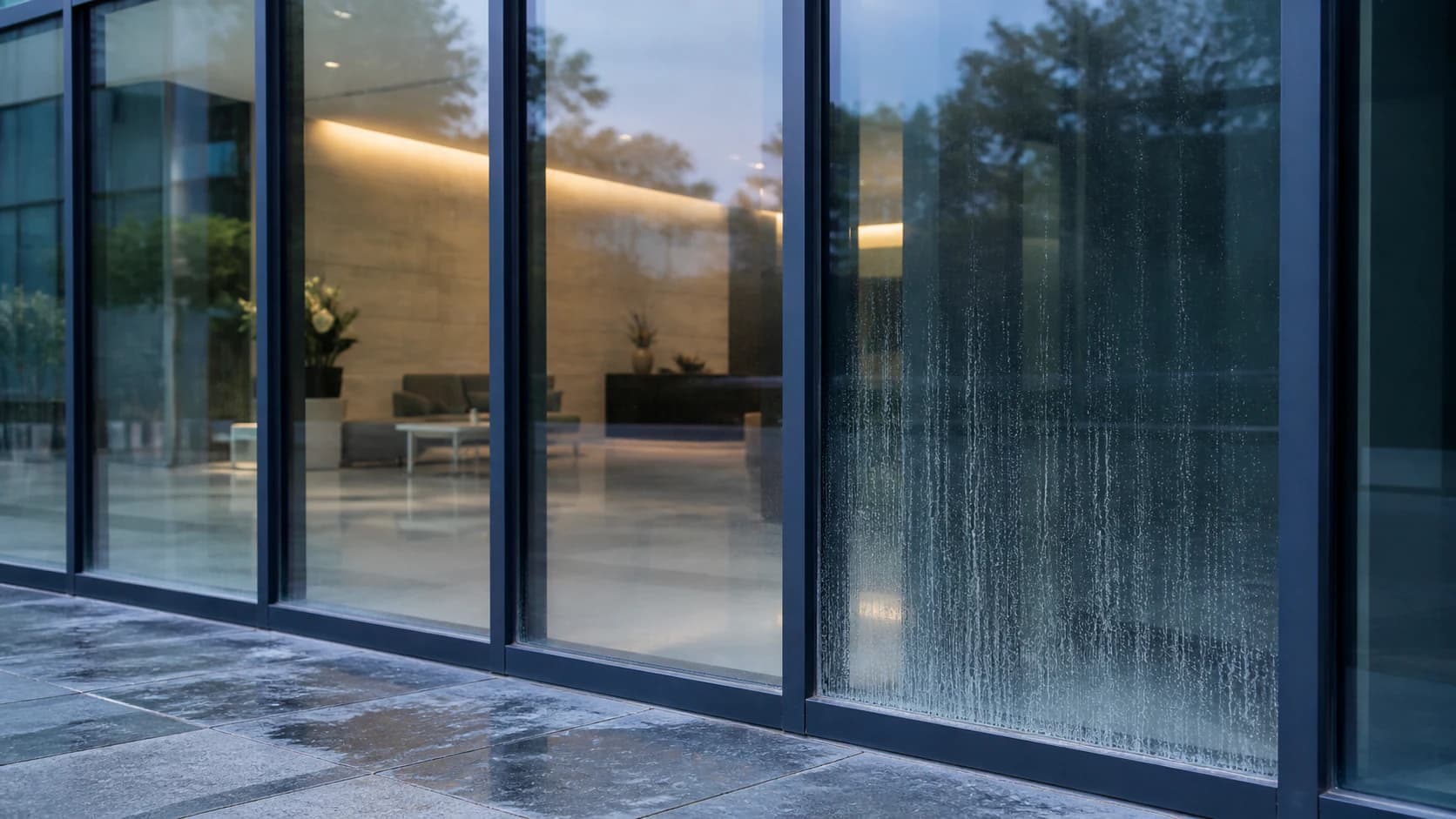
Deposits
Distinguish deposits from glass condition.
Initial assessment
A decision based on the glass, damage and site constraints
- Overall view of the affected area
- Close-up with reflection or raking light
- Dimensions and panel count
- Site or equipment type, including heavy machinery, access and operating constraints
Feasibility is confirmed before work begins
Cracks, impacts, breakage, structural damage and situations incompatible with glass polishing require another solution.
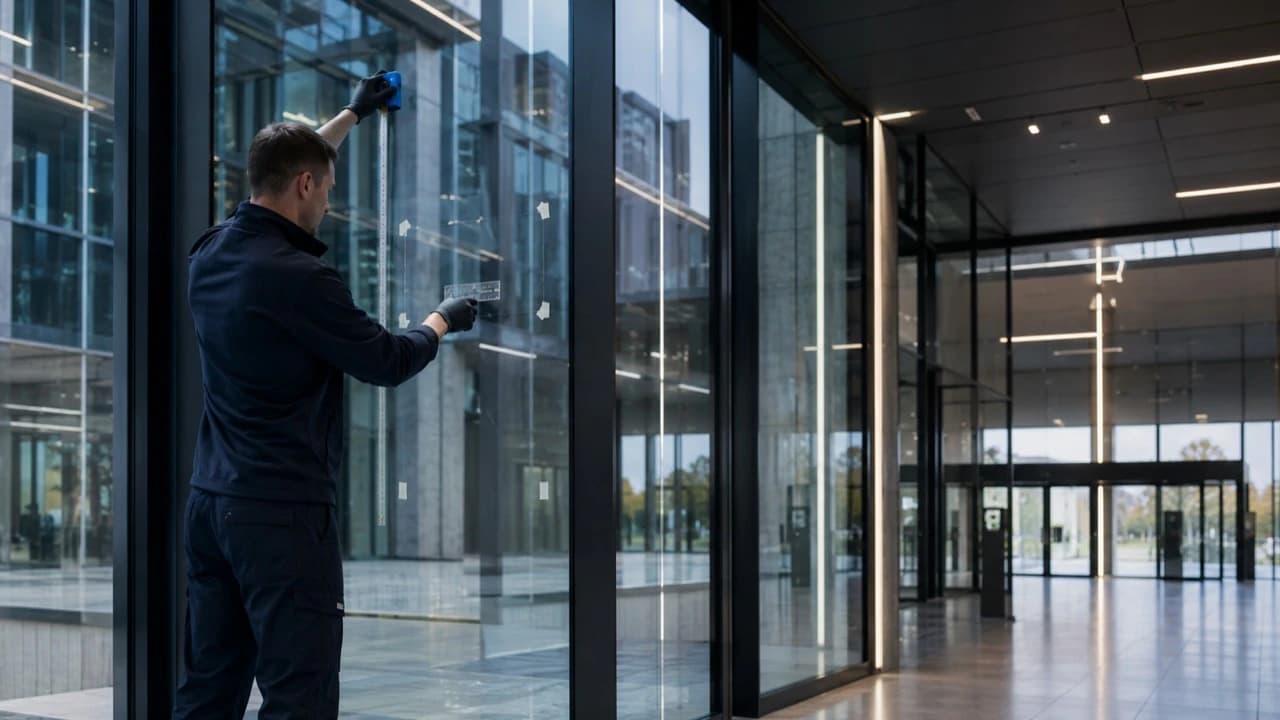
Measurement and assessment
Document the surface and its dimensions.
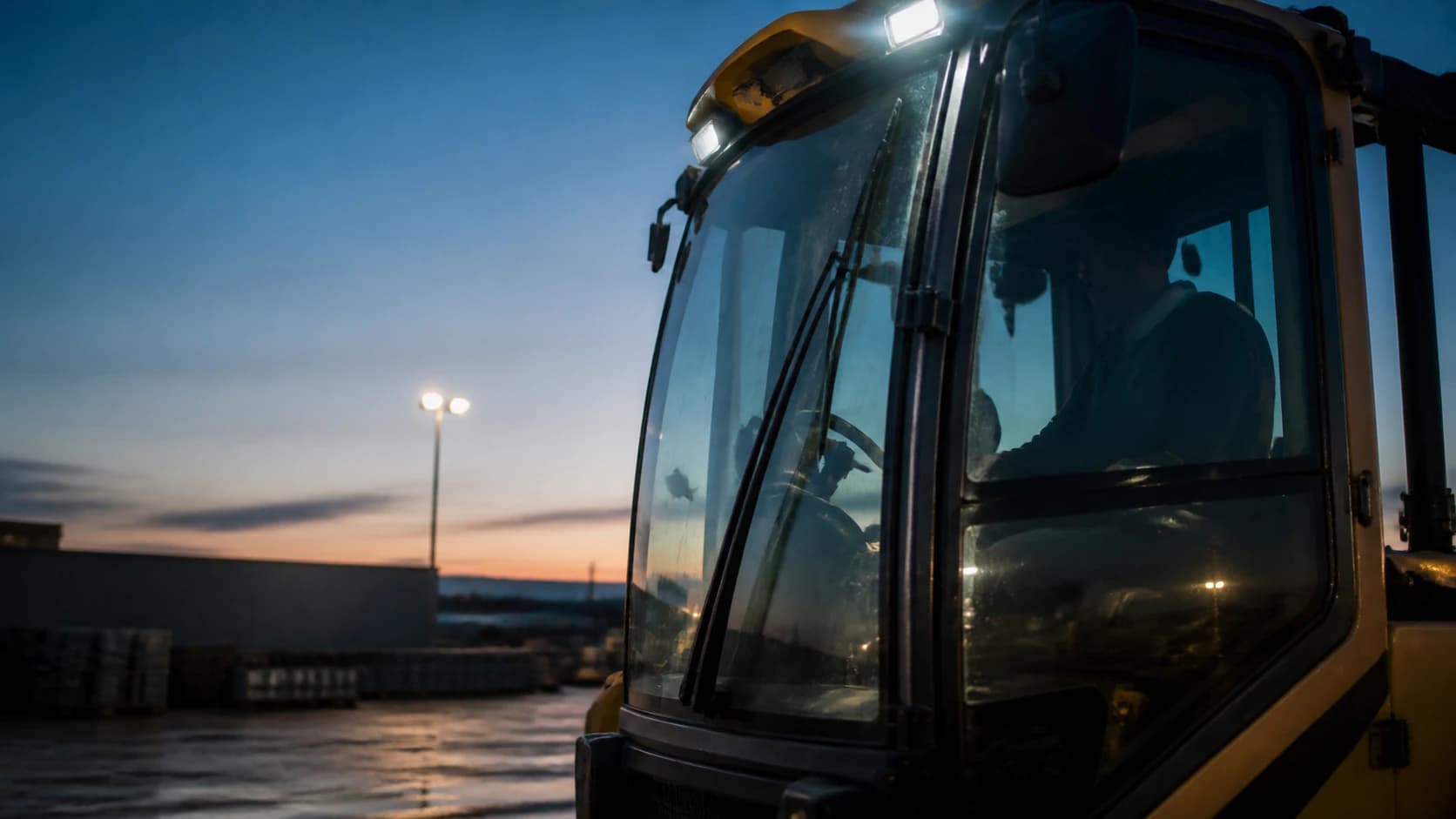
Transportation and equipment
Cab glazing and visibility.
Heavy machinery and commercial vehicles
Clarity that supports the operator’s field of view.
On heavy machinery, commercial vehicles and trucks, clear glazing supports the operator’s visibility. Certain marks or deposits can make difficult viewing angles, glare, low sun or nighttime contrast more disruptive; restoration feasibility always depends on the glass and damage.
Initial assessment
See if your commercial glass can be restored
Send the location, dimensions and clear photos of the surface to begin the review.